
Top 10 Best Chess Openings for Beginners Under 1000 ELO
Choosing an opening shouldn’t feel like memorizing a textbook. Our 50+ FIDE-rated coaches teach 1,500+ active students every month across 20+ countries — and the same three fundamentals decide almost every beginner game: fast development, central control, and early king safety. This guide ranks the openings that actually work below 1000 ELO, with a full board diagram for each.
Quick Comparison
| Rank | Opening | Best For | Color | Rating |
|---|---|---|---|---|
| 1 | Chennai Chess Club — Guided Curriculum | Structured, coaching progress | Both | 10/10 |
| 2 | Italian Game | First White opening, teaches principles | White | 9.5/10 |
| 3 | London System | Low-theory, reliable White setup | White | 9/10 |
| 4 | Caro-Kann Defense | Safe, solid Black repertoire | Black | 8.5/10 |
| 5 | Queen’s Gambit | Positional 1.d4 players | White | 8.5/10 |
| 6 | Scotch Game | Aggressive, open-position beginners | White | 8/10 |
| 7 | Scandinavian Defense | Quick-to-learn Black response | Black | 7.5/10 |
| 8 | French Defense | Patient, structural defenders | Black | 7.5/10 |
| 9 | King’s Indian Defense | Counterattacking players near 1000 | Black | 7/10 |
| 10 | Closed Sicilian | Players graduating past 800 ELO | Black | 7/10 |
Why the Opening Matters Less Than the Coaching
Nobody loses a beginner-level game because they forgot move 14 of a database line. Games under 1000 ELO are won and lost in the first ten moves, almost always on basic principles: did you develop your pieces, did you fight for the center, did you castle in time. That’s why our coaches spend far more time on why a move works than on drilling a move order — a student who understands a plan can adapt when the opponent goes off-book, which happens in nearly every beginner game.
How We Ranked These Openings
| Criterion | Weight | What We Looked For |
| Ease of Learning | 30% | Can a beginner grasp the idea without rote memorization? |
| Principled Play | 25% | Does it reinforce development, center control, king safety? |
| Practical Results | 20% | Does it actually win games below 1000 ELO? |
| Longevity | 15% | Does it stay useful as the student’s rating climbs? |
| Coachability | 10% | Can a coach build a full lesson plan around it? |
The Rankings
1.Chennai Chess Club — Guided Opening Curriculum
Key Features
- 50+ FIDE-rated coaches matched to each student, not a generic instructor
- Structured, level-based curriculum that sequences openings with tactics and endgames
- Dedicated Parent Relations Executive handling scheduling and updates
- Dedicated Performance Coach focused on tournament readiness and rating growth
- Our own smart interactive chessboard — the coach sees and guides piece moves live, even remotely
- Monthly online tournaments to test openings under real competitive conditions
Best For
Families anywhere in the world who want real coach accountability, structured levels, and a board that keeps remote lessons genuinely interactive.
Rating: 10/10
2.Italian Game
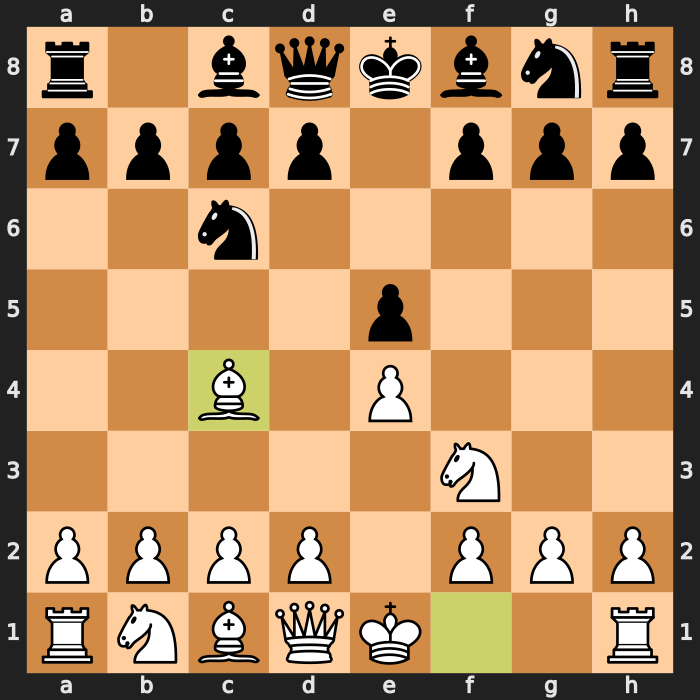
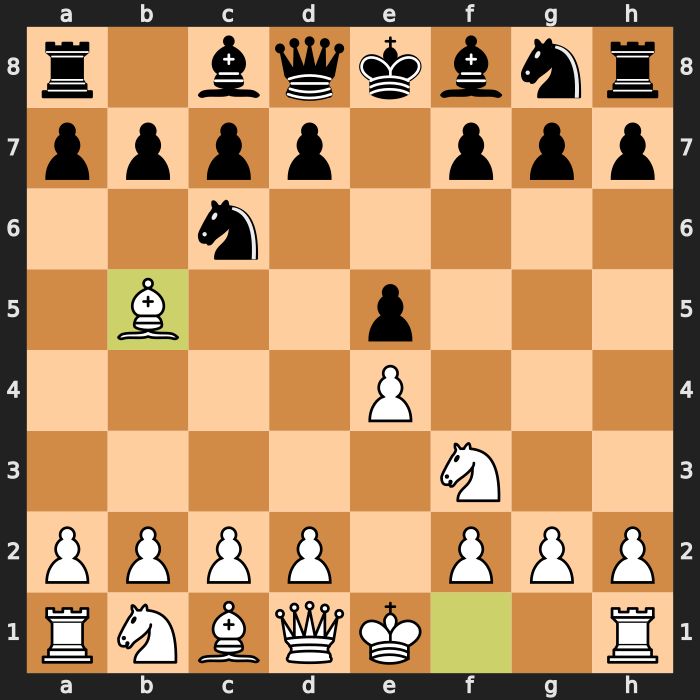
1.e4 e5 2.Nf3 Nc6 3.Bc4
The Italian Game is often the very first opening our coaches teach new White players, because every one of its three opening moves has an obvious reason behind it: control the center, develop a knight toward the action, and aim a bishop at the opponent’s weakest point (f7).
Key Features
- Simple three-move setup with a clear plan behind each move
- Leads naturally into tactical lines (Giuoco Piano, Two Knights) as skill grows
- Teaches the difference between developing and developing with purpose
- Rewards students who spot simple tactics early, building confidence fast
Best For
Best For
A first White opening for any student aged 6+, ideal for Level 1 of a structured curriculum.
Rating: 9.5/10
3.London System
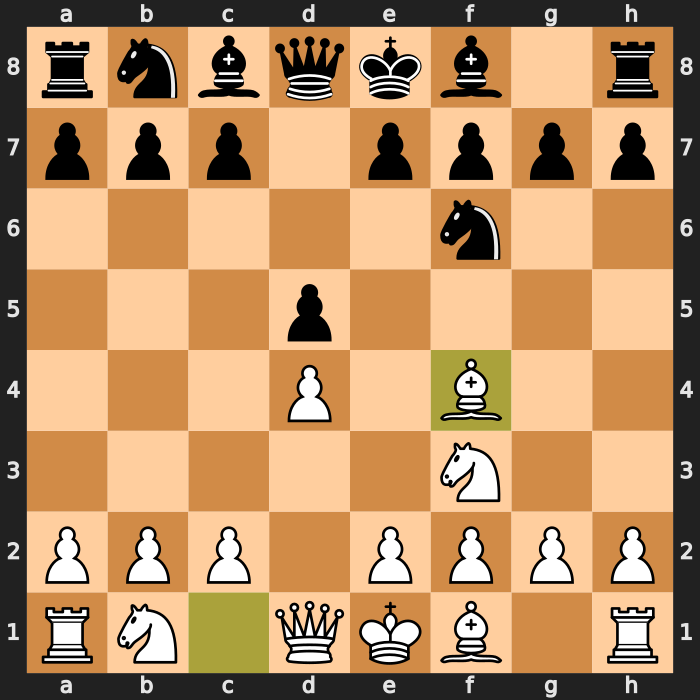
1.d4 2.Nf3 3.Bf4
The London System is the opening we recommend for students who want a dependable setup that doesn’t change much regardless of what Black plays. The piece placement stays largely the same game after game, which lowers decision fatigue for a beginner still learning to calculate.
Key Features
- Same plan regardless of Black’s response — less to memorize
- Still produces real attacking chances on the kingside
- Used by strong club and even some titled players as a practical weapon
- Easy for a coach to teach in a single structured lesson
Best For
Beginners who want to start winning games quickly without a heavy theory load.
Rating: 9/10
4.Caro-Kann Defense
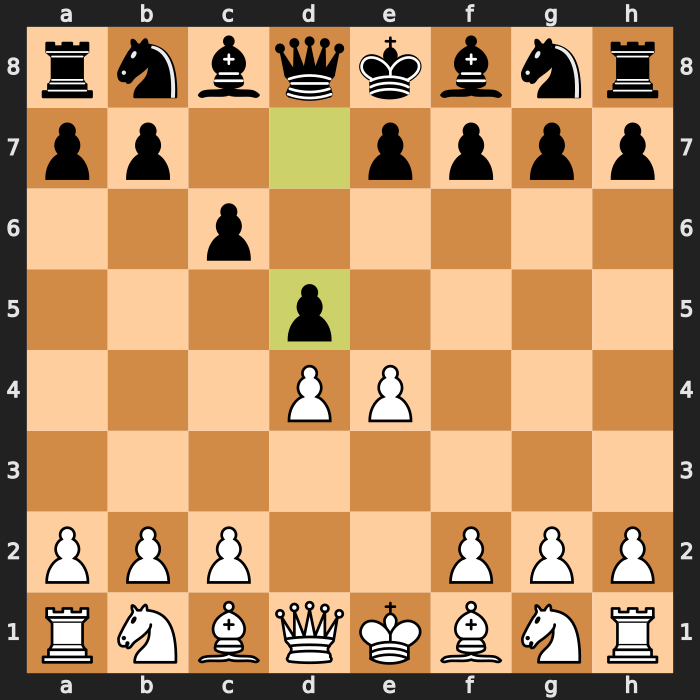
1.e4 c6 2.d4 d5
For Black players, the Caro-Kann is one of the safest and most teachable defenses at the beginner level. It avoids the cramped-bishop problem that trips up players in similar setups, and gives students a clear, repeatable plan against 1.e4.
Key Features
- Sound pawn structure with no obvious long-term weaknesses
- Frees the light-squared bishop before the position closes
- Clear strategic ideas rather than sharp tactical memorization
- Scales naturally into intermediate and advanced play
Best For
Students who want a dependable Black opening to pair with the Italian Game or London System.
Rating: 8.5/10
5.Queen’s Gambit
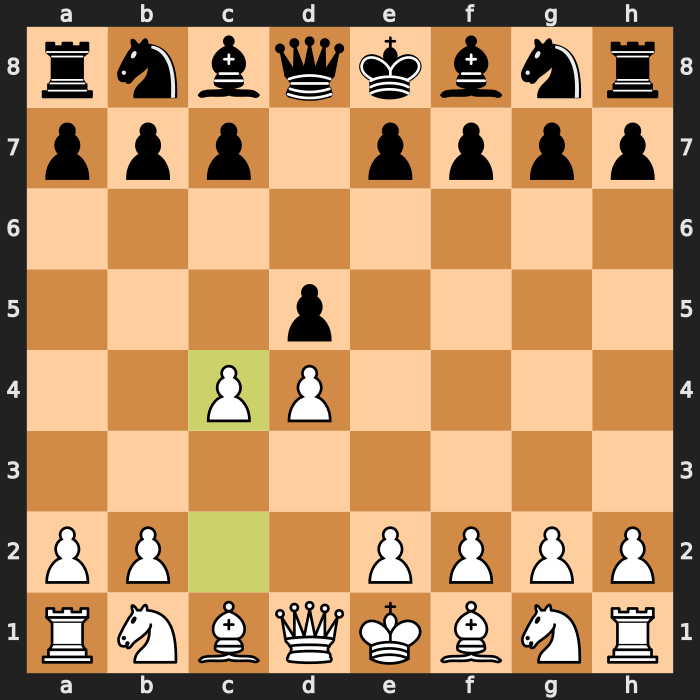
1.d4 d5 2.c4
A centuries-old opening that still forms the backbone of many strong players’ repertoires. It teaches beginners how to fight for the center with a pawn offer rather than a direct pawn grab, rewarding patient, positional thinking.
Key Features
- Introduces pawn tension and central strategy early
- Forces Black to make a real decision (accept or decline the pawn)
- Builds toward strong intermediate-level understanding
Best For
Students who enjoy slower, strategic games more than sharp tactical fights.
Rating: 8.5/10
What Makes Chennai Chess Club Different
1,500+ active students every month, across 20+ countries, taught by a bench of 50+ FIDE-rated coaches — with a support structure most online chess programs simply don’t build.

50+ FIDE-Rated Coaches
Matched by level and goals, not assigned at random.
Smart Interactive Chessboard
Coaches see and guide piece moves live, even remotely.